Most Modbus RTU problems are wiring problems. Here is how to wire an RS-485 bus correctly: topology, termination, biasing, cable and shielding.
RS-485 sends data as a voltage difference between two wires, often labelled A and B (or D− and D+). That makes it tolerant of noise and good for long runs in a factory. It is a half-duplex bus: devices take turns to talk. The standard allows up to about 10 Mbit/s over short distances and runs up to about 1,200 m at lower speeds; real limits depend on the cable, the transceivers and the environment.
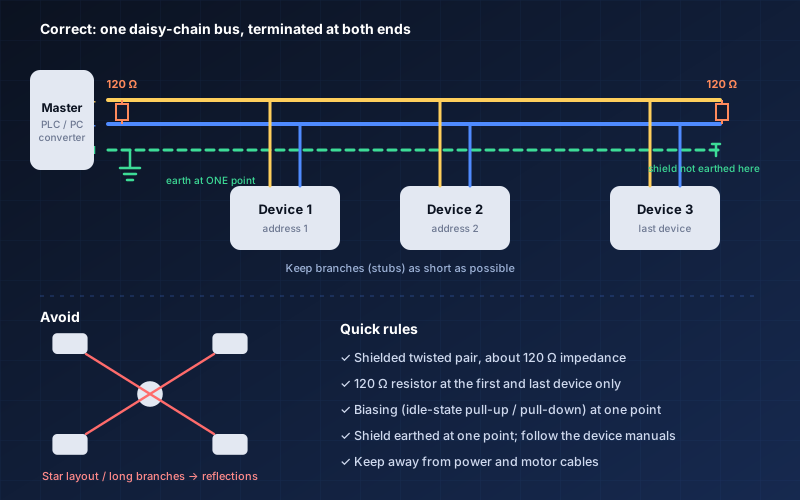
Tap or click the diagram to enlarge it.
Follow these and most buses work the first time.
Check the datasheets of your devices for the exact figures.
The standard load allows 32 unit loads on a bus. Modern low-load transceivers allow more, so check each device.
Up to about 1,200 m at lower baud rates. Faster rates need shorter runs.
The master polls devices in turn, so the time for a full scan grows with the number of devices.
Always switch off before touching terminals.
Electrical work should be done by qualified people with the equipment switched off and locked out. Always follow the device manuals; this article is general guidance, not a design for your site.
Tell us what devices you have and we will recommend a communication plan.