Meters, drives, PLCs and software need a shared language to exchange data. Here are the common industrial protocols, what they run on, and how to choose between them.
A protocol is an agreed set of rules for how devices ask for data, answer, and check for errors. The wiring (the physical layer) and the protocol (the language) are separate decisions, but they must match on both devices. This guide is a map of the most common choices in factories; the next articles go deeper on Modbus, RS-485 wiring and Ethernet.
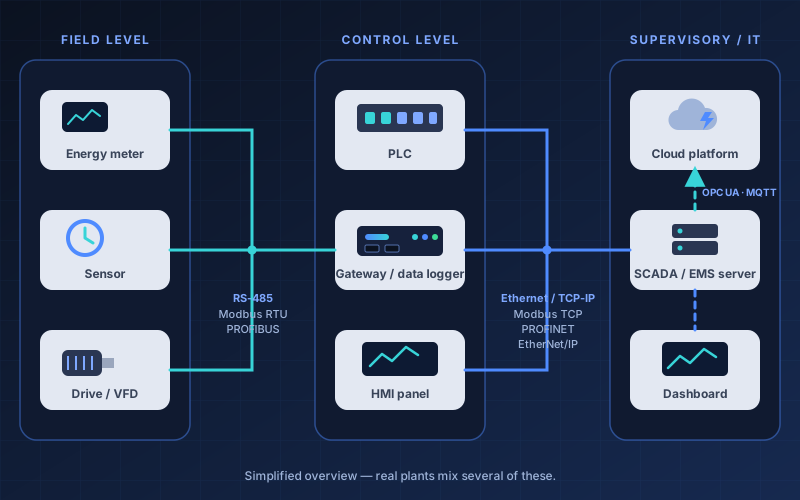
Tap or click the diagram to enlarge it.
Each has a home territory. None is best everywhere.
Master and slave over a serial line, usually RS-485. Simple, and supported by a huge range of meters, sensors and drives.
The same Modbus data model carried over Ethernet, normally on TCP port 502.
PROFIBUS is a serial fieldbus; PROFINET is its Ethernet-based counterpart. Both are managed by PROFIBUS & PROFINET International and are common in plants that use Siemens PLCs.
An Ethernet-based protocol built on the Common Industrial Protocol (CIP), managed by ODVA and common with Rockwell Automation (Allen-Bradley) PLCs.
A vendor-neutral, platform-independent standard from the OPC Foundation for exchanging data between machines and IT systems, with security built in.
A lightweight publish/subscribe messaging protocol, often used to send data from a site up to cloud or IT platforms.
Start from the equipment you already have, not from the protocol list.
This article is a general overview. Brand associations (for example PROFINET with Siemens) are typical, not exclusive. Always confirm what a specific device supports in its manual.
Tell us what devices you have and we will recommend a communication plan.