Ethernet carries Modbus TCP, PROFINET, EtherNet/IP and OPC UA. Here are the TCP/IP basics, the cable and connector rules, and the network habits that keep a plant network reliable.
For two devices to talk over Ethernet, three things must be right: a physical link (cable and switch port), an IP address on the correct network, and a protocol both devices understand. Most connection problems on site come from one of those three.
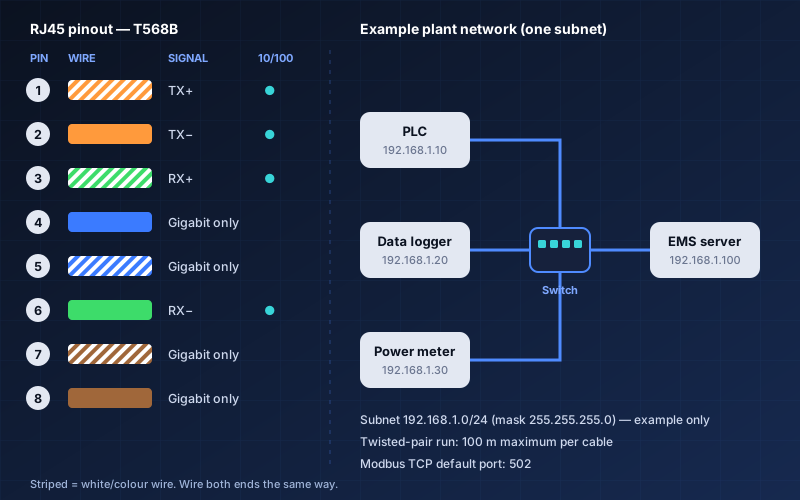
Tap or click the diagram to enlarge it.
You do not need to be a network engineer, but these three ideas solve most problems.
Every device needs a unique address, for example 192.168.1.20 (an example of a private address). Two devices with the same address cause conflicts.
Devices on the same subnet, for example mask 255.255.255.0, talk to each other directly. The gateway is the router address used to reach other networks.
A port identifies the service on a device. Modbus TCP normally uses 502, OPC UA commonly 4840, MQTT 1883 (8883 with TLS), and EtherNet/IP 44818.
The diagram above shows the T568B pinout and an example network.
Small habits prevent most late-night callouts.
IP addresses in this article are examples only. Use the addressing plan of your own site. Port numbers and cable limits are typical values; confirm them in the device and cable documentation.
Tell us what devices you have and we will recommend a communication plan.