Modbus is the most common language between meters, sensors, drives and software. Here is how it works, how RTU and TCP differ, and why a device can be wired perfectly and still not answer.
Modbus was first published by Modicon in 1979 and is now an open standard maintained by the Modbus Organization. It uses a simple request-and-response model: one master (also called the client) asks, and a slave (the server) answers. That simplicity is why you find it on almost every energy meter.
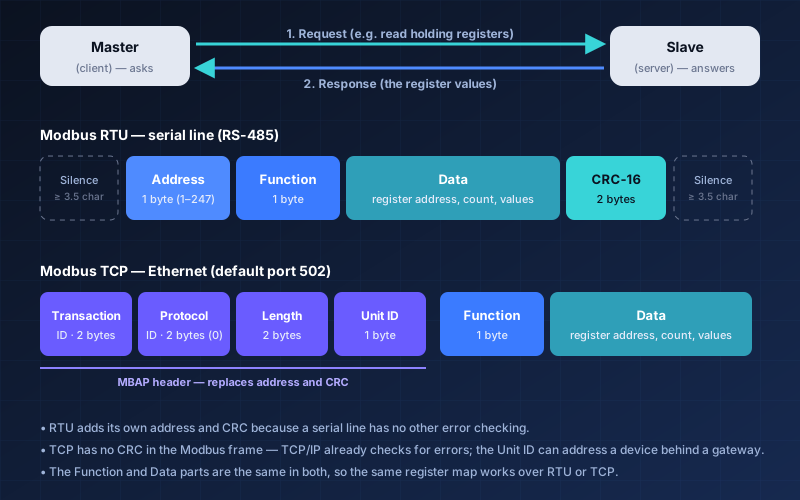
Tap or click the diagram to enlarge it.
The data model is the same. Only the way it is carried differs.
Compact binary frames over a serial line (usually RS-485), checked with a 16-bit CRC. Frames are separated by a silent gap of at least 3.5 character times.
Human-readable text frames over serial, checked with an LRC. Rare today, but still found on some older devices.
Modbus carried inside TCP/IP over Ethernet, normally on port 502. A short MBAP header replaces the address and CRC; TCP itself provides error checking.
Every Modbus device exposes its data as one of four tables. The classic numbering is shown in brackets.
The function code tells the slave what to do.
Check these in order before blaming the device.
Electrical work should be done by qualified people with the equipment switched off and locked out. Always follow the device manuals; this article is general guidance, not a design for your site.
Talk to our engineers about connecting your meters and devices.