An energy monitoring system has three parts that must work together. Here is how they connect, where to put the meters, and what to settle before installation.
Most first-time energy monitoring projects go wrong in the planning, not the hardware. Meters end up in the wrong places, nobody owns the data, or the readings cannot reach the software. A little planning up front avoids all three.
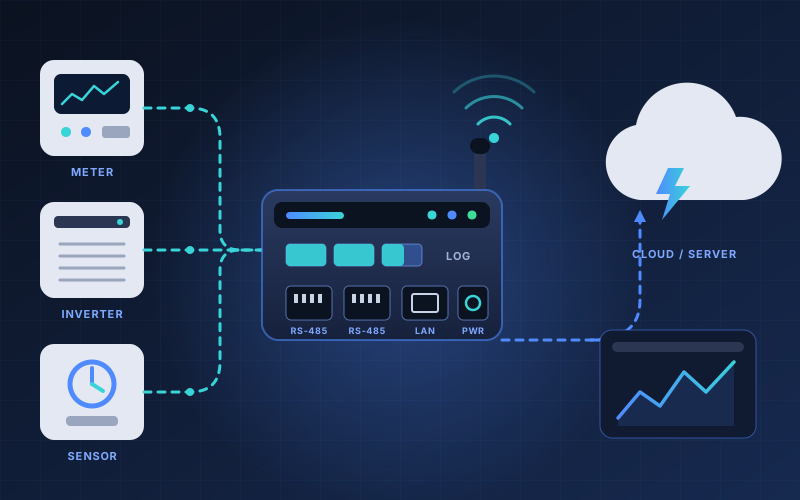
Tap or click the diagram to enlarge it.
Each part has one job. The system works only when all three do.
Measures electrical quantities such as power and energy at one point. Many industrial meters offer a serial RS-485 port using the Modbus protocol, or an Ethernet port.
Polls the meters over RS-485 or the network, adds time stamps, stores the readings and forwards them. It is the link between the field and the software.
Turns the readings into dashboards, trends and reports that people can act on.
You do not need to meter everything. Start with the points that answer your biggest questions.
Settle these points before anyone orders hardware.
This article is general guidance. The right metering points, hardware and settings depend on a site survey and your electrical system, and are confirmed in a written design.
Tell us about your site and we will recommend metering points and a system layout.