Large factories and buildings in Thailand must manage and report their energy use under the Energy Conservation Promotion Act. Here is what the rules cover, and where good metering data helps.
If your factory uses a lot of electricity, Thai law may already require you to manage and report your energy. This article summarises the main points in plain language, based on public information from the Department of Alternative Energy Development and Efficiency (DEDE). It is general information, not legal advice — confirm your status with DEDE or a licensed energy auditor.
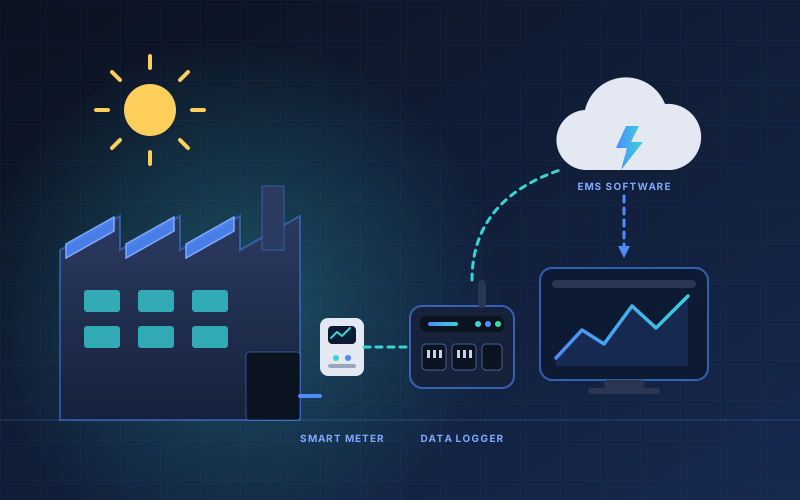
Tap or click the diagram to enlarge it.
The Energy Conservation Promotion Act B.E. 2535 (amended B.E. 2550) sets duties for controlled factories and controlled buildings. In a notice dated 15 January 2026, DEDE described the group that must report as facilities using electricity at 1,000 kilowatts or higher, or total energy equal to 20 million megajoules a year or more. In outline, the owner must:
The qualifications, number and duties of this person are set by a ministerial regulation of B.E. 2552 (2009).
Energy must be managed using the standards, criteria and methods in the ministerial regulation on energy management in controlled factories and buildings (B.E. 2552).
Each year a report from an energy management inspector and certifier licensed by DEDE must be submitted. For fiscal year B.E. 2568, DEDE set the deadline at 31 March 2026.
A metering system does not make a factory compliant by itself, but good data makes each duty easier.
This article is general information summarised from public DEDE sources and is not legal advice. Thresholds, deadlines and procedures can change — confirm them with DEDE or a licensed energy auditor.
Tell us about your site and we will recommend where to meter.