Motors drive most of the machinery in a factory. For fans and pumps with varying load, a variable frequency drive (VFD) can cut energy use far more than the drop in speed alone suggests.
Electric motor systems — pumps, fans, compressors and conveyors — use most of the electricity in industry. US Department of Energy studies have put motor-driven systems at roughly two-thirds of industrial electricity use; the share in your plant will differ. That makes motors one of the first places to look for energy savings, and variable speed control one of the most effective tools.
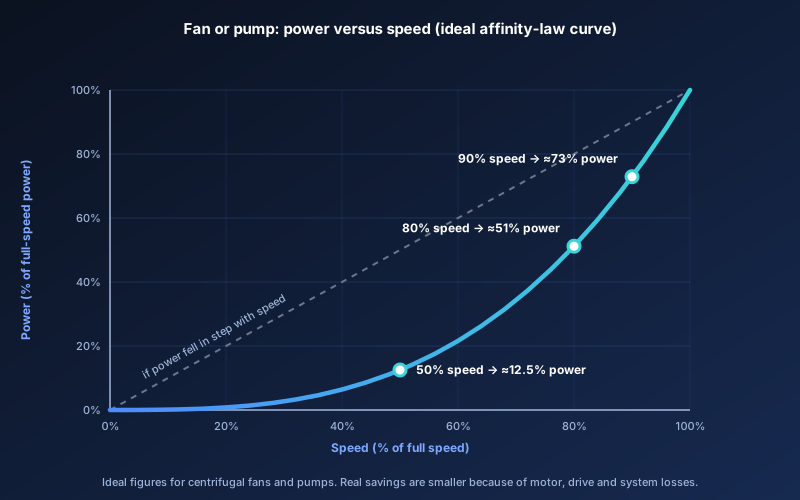
Tap or click the diagram to enlarge it.
For centrifugal fans and pumps, flow is proportional to speed but power is proportional to speed cubed. In ideal terms:
Look for loads that vary and run for many hours.
A drive is not a magic box. Check these first.
If the motor always runs at full load, there is little to save by slowing it.
DOE warns that drives are not suitable for all pumps, particularly those working against high static (elevation) head.
Drives can add electrical noise and harmonics. Follow the manufacturer's guidance on cabling, filters and earthing.
Measure first, then decide.
This article is general guidance based on public sources. Savings depend on your equipment, operating hours and load, and are not guaranteed — measure before and after. Have electrical and pressure-system work done by qualified people.
Tell us about your site and we will recommend where to meter.