Energy Conservation

Compressed Air Leaks: The Hidden Energy Cost in Your Factory

Compressed air is one of the most expensive forms of energy in a plant, and leaks can waste a large share of what the compressor makes. Here is how to find them, fix them and keep them fixed.

Making compressed air takes a lot of electricity, and much of that energy ends up as heat rather than useful work. When air escapes through leaks, the compressor has to run longer to make up the difference. US Department of Energy guidance says leaks can waste as much as 20–30% of a compressor's output in a poorly maintained plant, and that a good leak program can bring this down to roughly 5–10%. Your own plant will differ, which is why measuring matters.
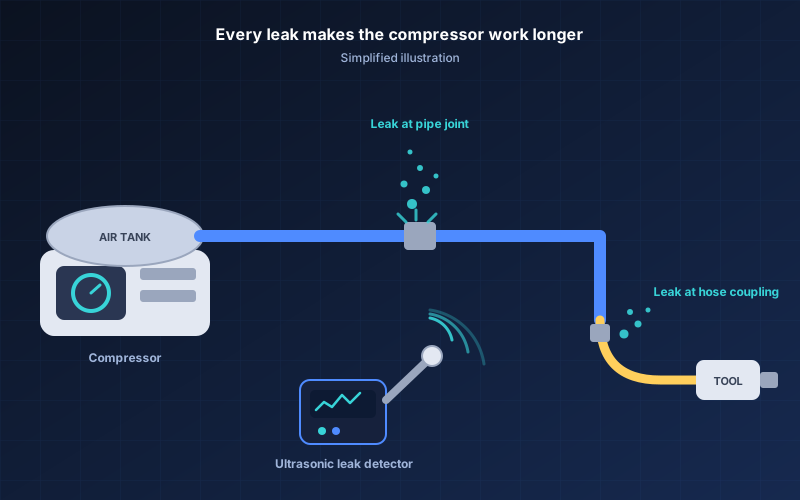
Illustration: compressed air leaking from a pipe joint and a hose coupling, located with an ultrasonic leak detector

Tap or click the diagram to enlarge it.

Why It Matters

Three Reasons to Look First

Leaks are easy to ignore because you cannot see them, but they show up on the electricity bill.

Compressed air is costly

Only a small share of the electricity that goes into a compressor ends up as useful work at the tool. The rest is lost, mostly as heat.

Leaks never take a break

A leak wastes air all day and all night. If the compressor keeps running to hold pressure, it keeps using electricity when production has stopped.

Often a quick payback

Repairing leaks usually needs little capital compared with new equipment, so it is a common first step in energy-saving programs.

Step 1

How to Find Leaks

Use more than one method. Each catches leaks the others can miss.

Where to Look

Common Leak Points

Step 2

Keep It Fixed

Leaks come back. A routine is worth more than a one-off survey.

This article is general guidance based on public sources. Savings depend on your equipment, operating hours and load, and are not guaranteed — measure before and after. Have electrical and pressure-system work done by qualified people.

Want to know what your compressors really use?

Tell us about your site and we will recommend where to meter.

Contact Our Team